A guest post by Dexter Thomas, CAA volunteer
I know exactly what it sounds like when the world screams, “You are not supposed to exist here.”
Three years ago, my spouse and I fled Utah to come to Minneapolis. As a transgender person, I wasn’t just moving — I was escaping a state where my existence was being legislated against. We came here specifically because Minnesota is a trans refuge state. We sought safety.
But seeking refuge meant leaving everything we knew. We left behind our families, our friends, and our history. When we crossed the state line into Minnesota, we didn’t know a single human being here.
But Minneapolis didn’t let us stay strangers.
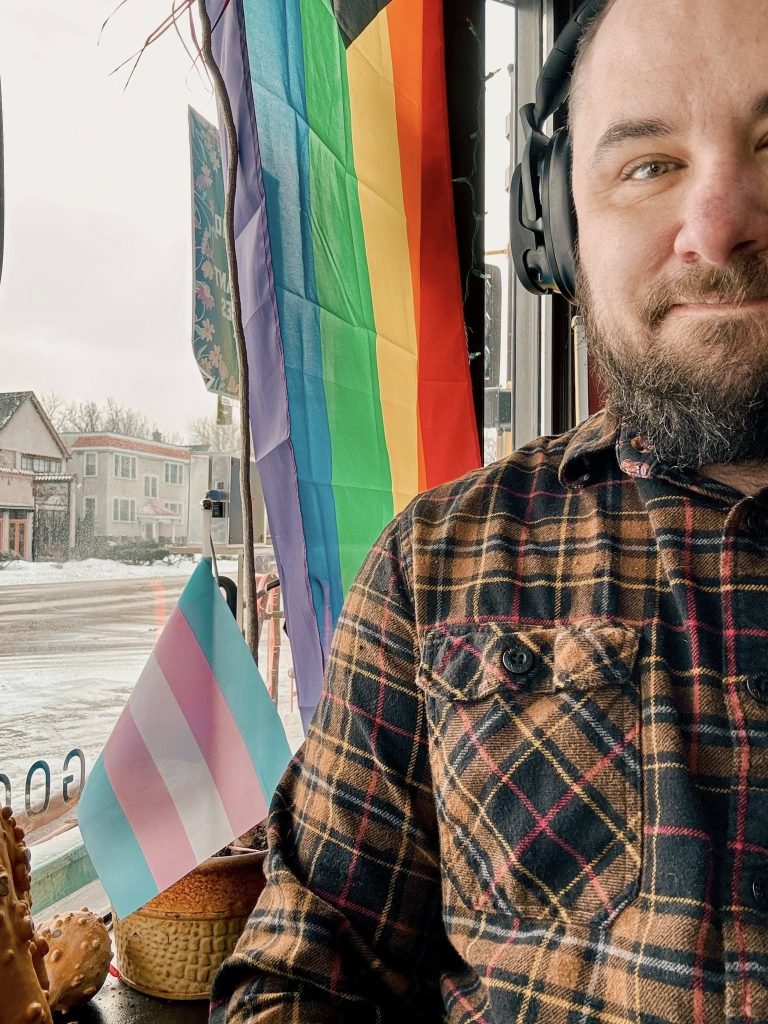
Within my first week, I walked to a coffee shop just down the street — one of the many independent spots woven into the fabric of our neighborhoods. In the window, I saw a Pride flag. That wasn’t just fabric — it was a signal telling me I was safe here. In that shop, I didn’t just find coffee — I found connection. I found friends.
And we were awe-struck by the beauty of it.
Coming from where we did, Minneapolis felt like something I had only seen in movies. The streets were lined with old trees that formed a canopy overhead. I saw children bicycling down the street with their parents — riding safely and confidently to school or the store. There were Little Free Libraries on what seemed like every block.
Everywhere we looked, we saw protected nature, wild turkeys, parks, and historic homes. A city that had made a collective decision to cherish what was unique and beautiful.
We moved here for safety. We stayed for the community. We fell in love with the peace.
The Warped Lens
Right now, people outside Minnesota are seeing Minneapolis through a warped lens: “chaos,” “lawlessness,” “out of control.” That story is convenient — because it’s being used to justify what is actually happening on our streets: an intensified federal crackdown and thousands of agents descending on and terrorizing our neighborhoods.
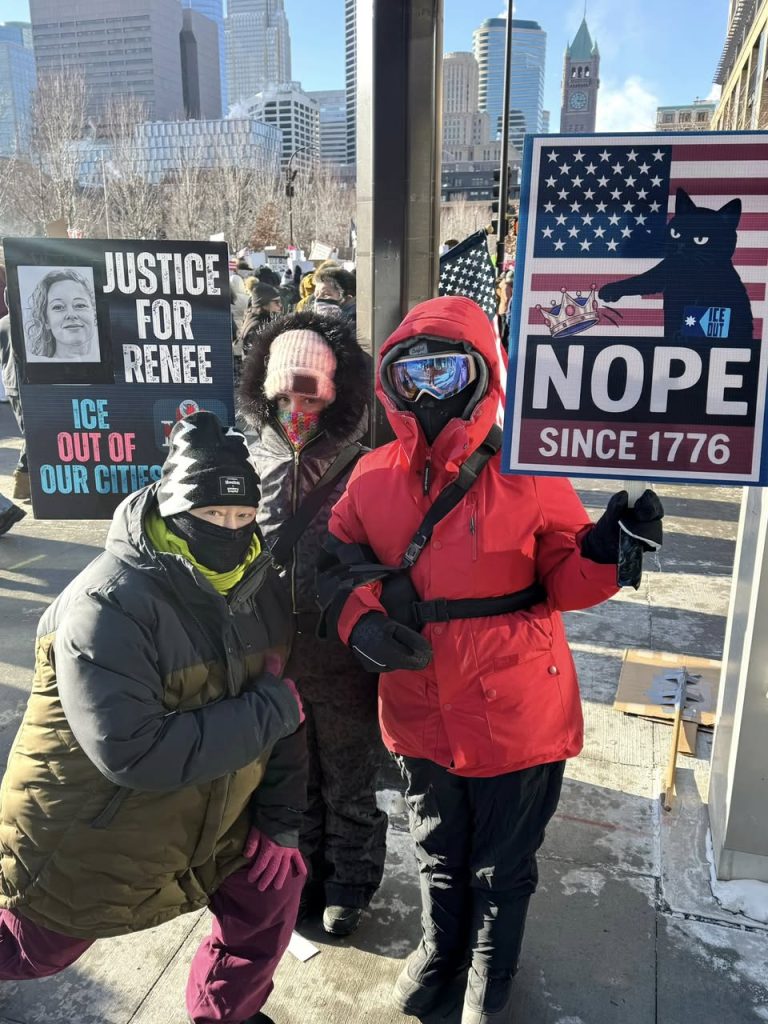
But I am here. I live blocks from where Renée Good was murdered in broad daylight during an ICE enforcement operation on January 7.
I walk these streets — the same tree-lined streets where those children ride their bikes. And what I see isn’t a city collapsing. I see a community being terrorized — and refusing to abandon each other anyway.
The Sound of Fear
Solidarity, strength, and resilience aren’t often flashed all over the news. Often, they look like logistics.
It looks like massive turnout in neighborhood Signal groups to organize food drives, grocery drop-offs, driving children to school, ICE sightings to peacefully observe, and safety checks. People are afraid to leave their homes, so neighbors are quietly building a safety net in real time.
Often, fear has a sound.
My spouse is a disabled veteran. I’m disabled too. We pay for snow removal, and the person who clears our snow has done it for years — hard-working, reliable, compassionate.
He isn’t just moving snow — he is keeping the neighborhood safe. He clears the paths so children can get to school, so neighbors can walk their dogs without slipping, and so our neighbors using wheelchairs and mobility aids can leave their homes.
This year, he only comes in the middle of the night. In single-digit Minnesota winter cold.
That detail echoes in my head: the quiet scraping of a shovel against pavement at 4:00 AM. The same necessary work, done like a secret. When someone has to do ordinary work under cover of darkness to feel safe, you don’t have to wonder whether the fear is “real.” You can hear it in the sound of the shovel.
Cruelty Depends on Disconnection
I’m a transgender person who sought sanctuary in Minneapolis. I’m also a vegan and an animal rights activist.
To me, those aren’t separate. They are connected by a hard-won lesson: I know what it feels like to be viewed as “inferior.”
I learned first-hand that people are capable of immense cruelty when they believe they are superior to someone else. And once you experience that mechanism — that dangerous hierarchy of worth — you see it everywhere. You realize that the specific mindset driving transphobia, homophobia, and xenophobia is the exact same mindset that fuels outdated attitudes toward nonhuman animals.
It is the belief that “I am above you, therefore your suffering does not matter.”
Compassionate Action for Animals (CAA) exists to dismantle that hierarchy and to build a world where all sentient beings — human and nonhuman — can thrive.
The worldview we fight in animal advocacy is the same worldview being tested on our streets right now: The belief that some lives are disposable. That a living, breathing being can be reduced to an outgroup, a statistic, or a target.
Don’t Take the Bait
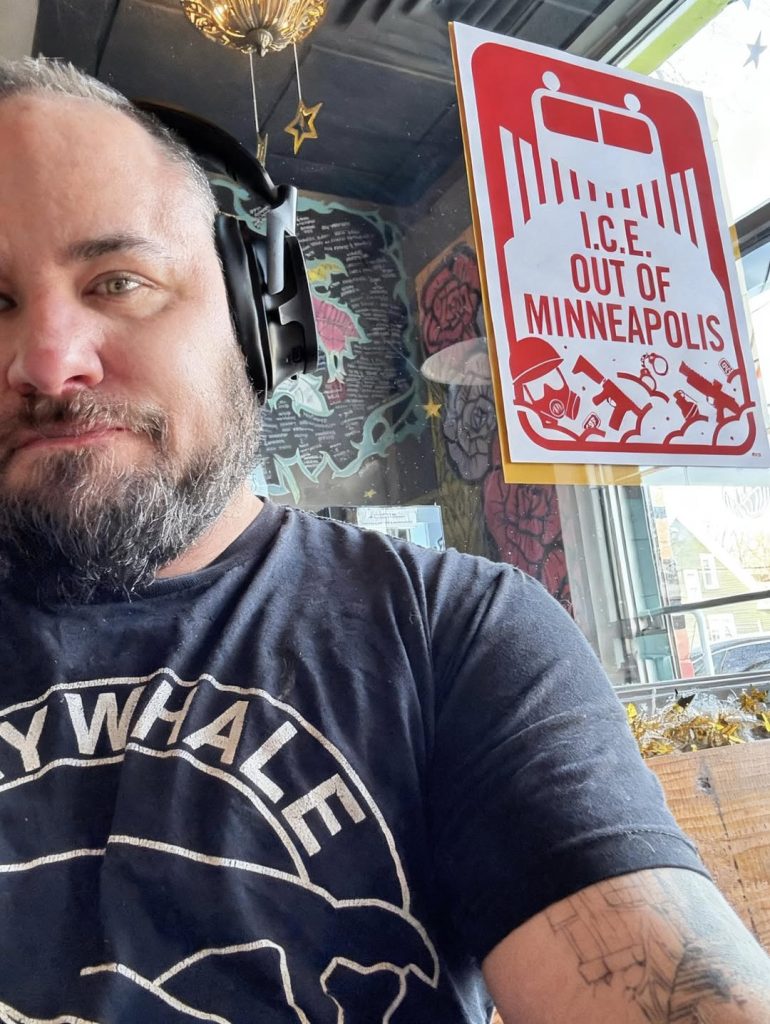
If you are reading this from outside Minneapolis, or if you are reading the comment sections filled with bots and coordinated accounts designed to make you feel alone: Don’t take the bait.
The truth lives in what I see every day: neighbors organizing food deliveries. People checking on each other. People quietly doing the work of sanctuary — even if they have to shovel snow in the middle of the night to stay safe.
Compassion Is a Muscle
Sanctuary is a verb. It is something we do. Compassion is a muscle. It is something we train.
The same muscle that helps someone choose kindness toward animals is the same muscle that helps someone show up for a terrified neighbor.
Please, continue to keep that muscle strong. Donate to CAA, support mutual aid, and show up where you can. Help us continue the vital work of building a more empathetic, connected Minneapolis — a city where we refuse to disconnect from the suffering of others, no matter who they are.
Editor’s note: This post is part of a series of perspectives we are sharing to show how recent ICE activity has affected our community. From volunteers and donors afraid to leave their homes and come to events, and businesses closing or chaining hours to protect staff members, to activists who are involved on the front lines, we will continue to amplify these voices and share experiences. If you have stories to share, feel free to reach out! If you are looking for resources for yourself or wondering how to help, check out this post on the topic.